
Shocking Report: Hannaford is Charging Higher prices in Maine’s Lower-Income Communities
What if your local grocer charged more because you had less to spend? And what if it was the only grocery store in town?
An alarming new report by the New England Consumer Alliance (NECA) has revealed that this may be the case for many Mainers. The research, published by the Portland Press Herald, reveals Hannaford stores in lower-income Maine communities are charging more for the same basket of groceries than stores in wealthier areas. This study, conducted as part of the What Happened to Hannaford? campaign, raises ethical concerns about pricing tactics at Hannaford and its parent company Ahold Delhaize, which has found itself in hot water over price disparities before.
We undertook this analysis after hearing an outpouring of concern from customers, especially seniors and people on fixed incomes, who told us Hannaford prices were becoming unaffordable in communities with few other grocery options. What we found was not random variation, but a consistent pattern where shoppers in lower-income communities pay more for the same basic necessities.
The Method
The January 2026 study selected five products from each of nine categories to represent a typical grocery shopping cart, including a mix of everyday food items, household goods, Hannaford private-label products, and national brands. The prices of these 45 items were compared across four Hannaford locations in Maine, with two stores (Machias and Millinocket) representing more rural, lower-income zip codes with higher poverty rates, and two (Falmouth and Scarborough) more urban, higher-income, low-poverty zip codes.
The Madness
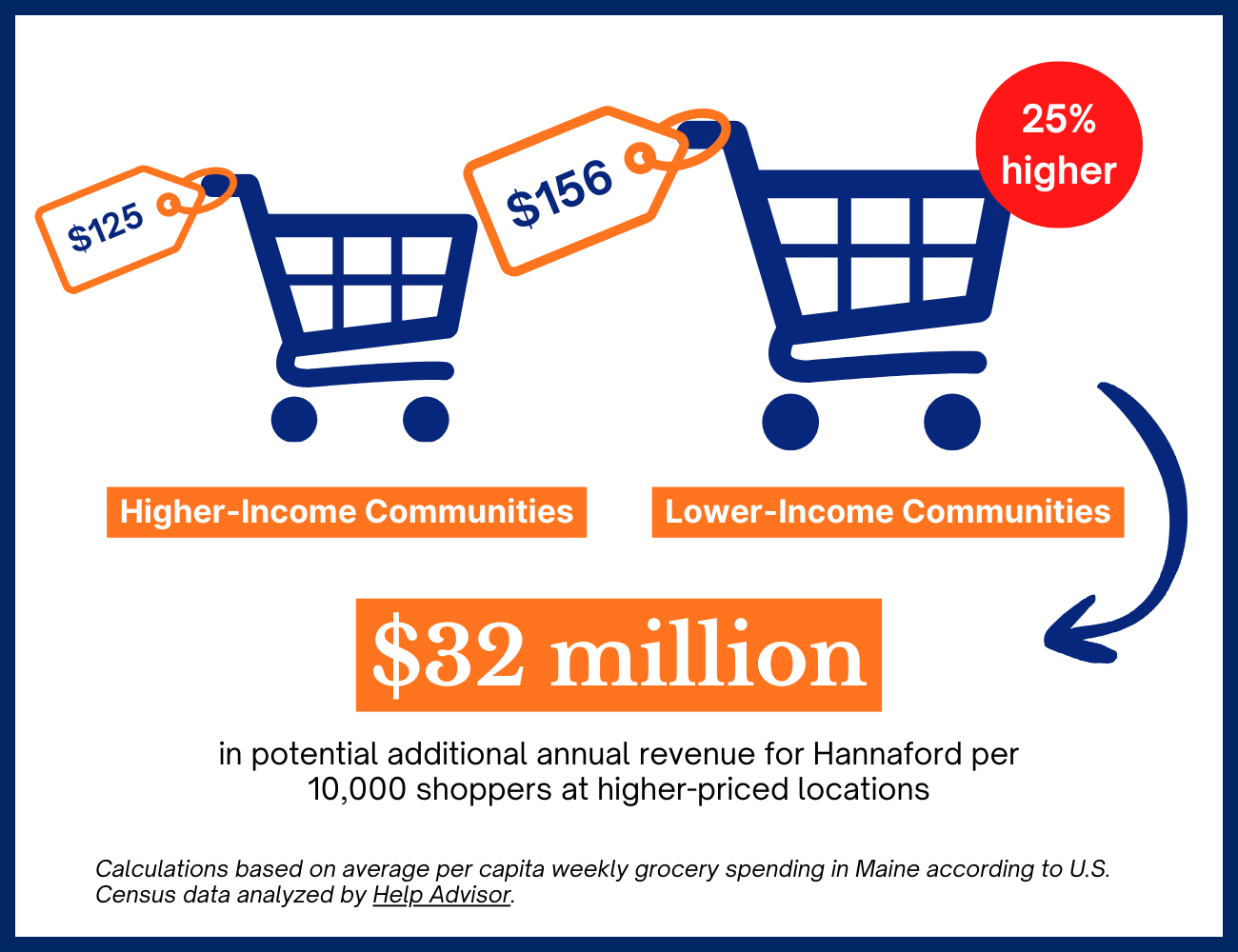
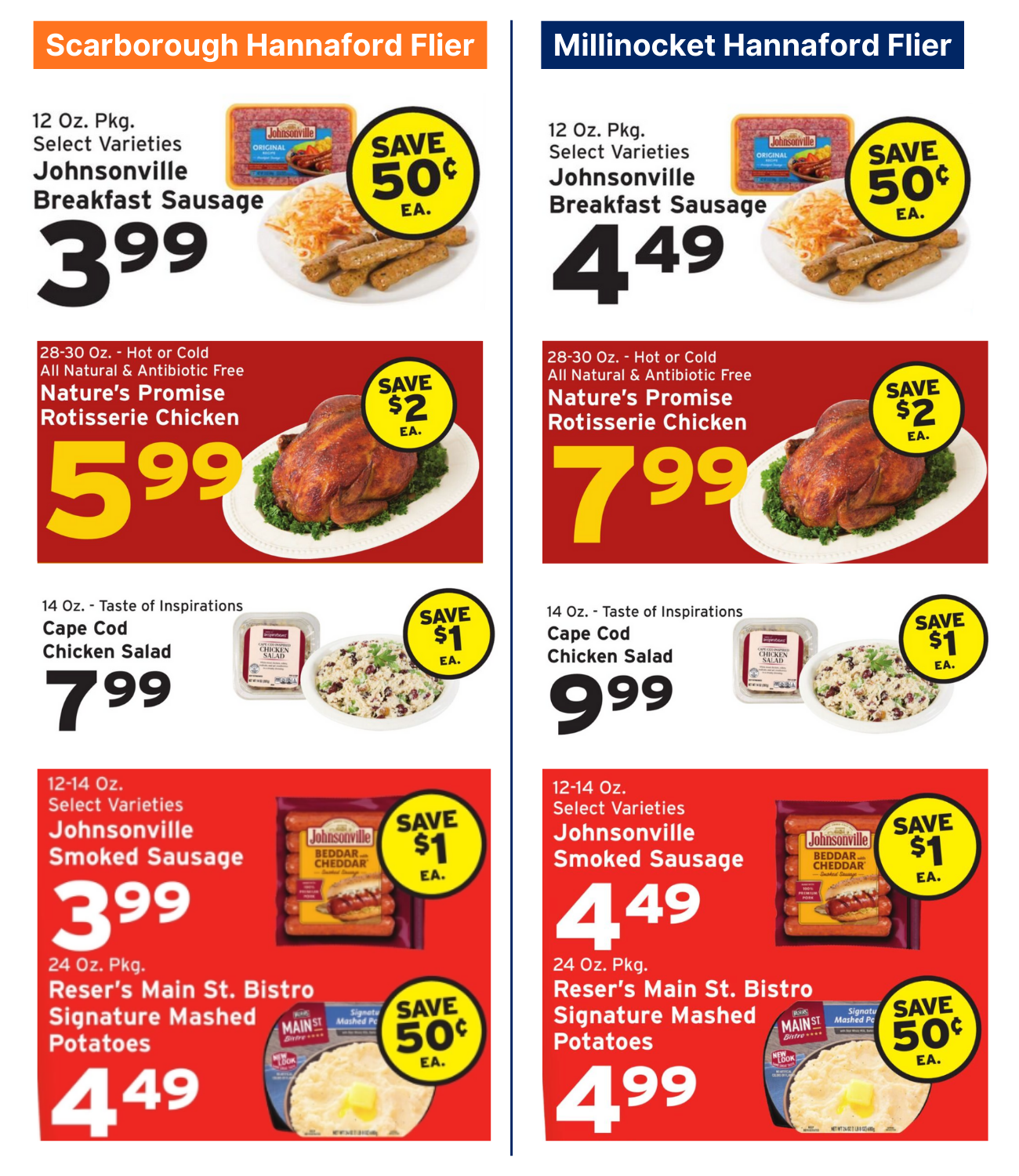
On average, a shopping basket totaling $124.97 at Hannafords in wealthier communities cost $156.35 at Hannafords in lower-income communities. This $31 price difference represents an astonishing 25 percent markup for the very same items. Based on average Maine grocery spend, such a price gap means shoppers in these lower-income areas might spend $272 more per month, or about $3,262 more per year per person. In a demanding economic climate where every dollar counts and Americans are working overtime to feed their families, this disparity raises questions about Hannaford’s motives — and hardworking Mainers deserve answers.
The M.O.
Watchful consumers may recall that this is not Ahold Delhaize’s first rodeo when it comes to this type of controversy. In 2023, Stop & Shop, another Ahold Delhaize brand, was embroiled in a national scandal after a youth-led research study called it out for charging 18 percent more in a predominately working-class minority Boston neighborhood than in a nearby wealthy suburb.
These findings drew scrutiny from lawmakers such as U.S. Senator Elizabeth Warren, who warned Ahold Delhaize’s CEO Frans Muller: “these types of price discrepancies place significant burdens on already-struggling consumers.” In spite of demands that Stop & Shop justify its pricing tactics, it continued price gouging anyway.
This research shows Ahold Delhaize has still not gotten the message that New Englanders will not tolerate abusive pricing tactics. It’s shameful that the same “poverty tax” is now appearing under another banner, in another region.
The Monopoly
The confounding price disparity between Hannaford stores in lower- and higher-income communities may be difficult to justify –– but undoubtedly Hannaford will try. The company may cite higher supply costs in rural locales, but recent data measure rural grocery price inflation in the neighborhood of 7 - 8 percent, far from the 25 percent gap identified by the study. Inflation cannot account for the conspicuously and consistently higher cost of diverse items sold by a company using centralized purchasing and distribution systems.
In some areas such as the two lower-income communities named in the study, Hannaford has a monopoly by way of being the only supermarket within a significant radius. Charging substantially higher prices in locations where shoppers have no real alternative suggests Hannaford may be taking advantage of its status in these areas. Such an approach centers profit at the expense of the communities that Hannaford, “your local grocer,” claims to be a meaningful and historical part of.
The Moment of Truth
Already inundated with consumer complaints about everything from frequent product recalls and customer data security breaches to declining product standards and increasing prices, Hannaford now must answer for an ethically questionable pricing model as well.
The New England Consumer Alliance is calling on Hannaford and Ahold Delhaize to disclose the algorithms and criteria used to set store-level prices and immediately end pricing structures that penalize low-income communities.
View the report: The Hannaford Poverty Tax
For more information about the analysis, contact [email protected].